Collapse Performance Evaluation for OCTG Tubing: Computational Techniques and FEA Verification
Introduction
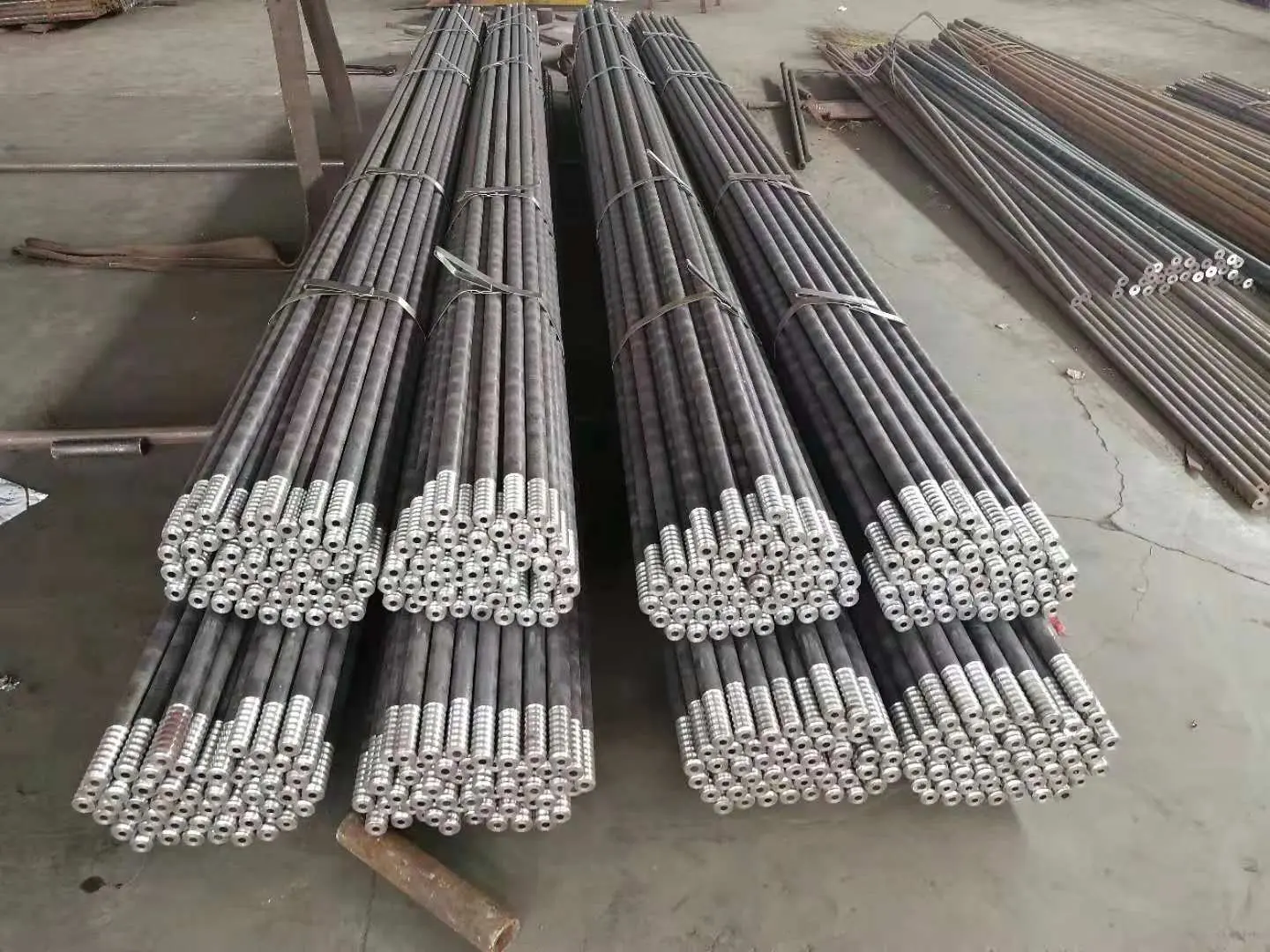
Oil Country Tubular Goods (OCTG) metal pipes, specifically high-potential casings like these laid out in API 5CT grades Q125 (minimal yield energy of 125 ksi or 862 MPa) and V150 (one hundred fifty ksi or 1034 MPa), are critical for deep and extremely-deep wells the place exterior hydrostatic pressures can exceed 10,000 psi (69 MPa). These pressures come up from formation fluids, cementing operations, or geothermal gradients, in all likelihood inflicting catastrophic collapse if now not competently designed. Collapse resistance refers to the optimum exterior power a pipe can face up to prior to buckling instability takes place, transitioning from elastic deformation to plastic yielding or complete ovalization.
Theoretical modeling of give way resistance has developed from simplistic elastic shell theories to state-of-the-art prohibit-kingdom strategies that account for material nonlinearity, geometric imperfections, and manufacturing-brought on residual stresses. The American Petroleum Institute (API) standards, significantly API 5CT and API TR 5C3, grant baseline formulation, yet for high-capability grades like Q125 and V150, those incessantly underestimate overall performance by reason of unaccounted factors. Advanced types, reminiscent of the Klever-Tamano (KT) finest restriction-state (ULS) equation, combine imperfections inclusive of wall thickness adjustments, ovality, and residual pressure distributions.
Finite Element Analysis (FEA) serves as a vital verification instrument, simulating full-scale conduct underneath managed circumstances to validate theoretical predictions. By incorporating parameters like wall thickness (t), outer diameter (D), yield potential (S_y), and residual stress (RS), FEA bridges the space among conception and empirical full-scale hydrostatic collapse assessments. This overview important points those modeling and verification innovations, emphasizing their utility to Q125 and V150 casings in ultra-deep environments (depths >20,000 ft or 6,000 m), in which cave in hazards magnify thanks to mixed lots (axial rigidity/compression, inner drive).
Theoretical Modeling of Collapse Resistance
Collapse of cylindrical pipes under external force is ruled via buckling mechanics, wherein the critical drive (P_c) marks the onset of instability. Early types handled pipes as suited elastic shells, yet real OCTG pipes express imperfections that in the reduction of P_c by using 20-50%. Theoretical frameworks divide cave in into regimes primarily based on the D/t ratio (most likely 10-50 for casings) and S_y.
**API 5CT Baseline Formulas**: API 5CT (ninth Edition, 2018) and API TR 5C3 outline 4 empirical disintegrate regimes, derived from regression of ancient take a look at facts:
1. **Yield Collapse (Low D/t, High S_y)**: Occurs while yielding precedes buckling.
\[
P_y = 2 S_y \left( \fractD \right)^2
\]
where D is the internal diameter (ID), t is nominal wall thickness, and S_y is the minimum yield potential. For Q125 (S_y = 862 MPa), a 9-5/8" (244.five mm OD) casing with t=zero.545" (13.eighty four mm) yields P_y ≈ eight,500 psi, yet this ignores imperfections.
2. **Plastic Collapse (Intermediate D/t)**: Accounts for partial plastification.
\[
P_p = 2 S_y \left( \fractD \top)^2.5 \left( \frac11 + 0.217 \left( \fracDt - 5 \properly)^zero.8 \accurate)
\]
This regime dominates for Q125/V150 in deep wells, where plastic deformation amplifies lower than top S_y.
3. **Transition Collapse**: Interpolates between plastic and elastic, through a weighted general.
\[
P_t = A + B \left[ \ln \left( \fracDt \top) \correct] + C \left[ \ln \left( \fracDt \top) \perfect]^2
\]
Coefficients A, B, C are empirical features of S_y.
4. **Elastic Collapse (High D/t, Low S_y)**: Based on skinny-shell thought.
\[
P_e = \frac2 E(1 - \nu^2) \left( \fractD \properly)^3
\]
the place E ≈ 207 GPa (modulus of elasticity) and ν = 0.3 (Poisson's ratio). This is not often ideal to top-potential grades.
These formulation contain t and D right now (by way of D/t), and S_y in yield/plastic regimes, however forget RS, preferable to conservatism (underprediction by 10-15%) for seamless Q125 pipes with necessary tensile RS. For V150, the excessive S_y shifts dominance to plastic fall apart, but API rankings are steel pipe factory minimums, requiring top class enhancements for ultra-deep service.
**Advanced Models: Klever-Tamano (KT) ULS**: To tackle API limitations, the KT sort (ISO/TR 10400, 2007) treats fall apart as a ULS adventure, establishing from a "most excellent" pipe and deducting imperfection consequences. It solves the nonlinear equilibrium for a ring underneath outside power, incorporating plasticity using von Mises criterion. The typical shape is:
\[
P_c = P_perf - \Delta P_imp
\]
in which P_perf is the ideal pipe cave in (elastic-plastic solution), and ΔP_imp bills for ovality (Δ), thickness nonuniformity (V_t), and RS (σ_r).
Ovality Δ = (D_max - D_min)/D_avg (many times 0.5-1%) reduces P_c by way of five-15% per 0.5% growth. Wall thickness nonuniformity V_t = (t_max - t_min)/t_avg (as much as 12.5% in step with API) is modeled as eccentric loading. RS, in many instances hoop-directed, is built-in as initial strain: compressive RS at ID (straightforward in welded pipes) lowers P_c by up to 20%, at the same time as tensile RS (in seamless Q125) enhances it by using five-10%. The KT equation for plastic crumble is:
\[
P_c = S_y f(D/t, \Delta, V_t, \sigma_r / S_y)
\]
**Incorporation of Key Parameters**:
- **Wall Thickness (t)**: Enters quadratically/cubically in formulas, as thicker walls resist ovalization. Nonuniformity V_t is statistically modeled (natural distribution, σ_V_t=2-five%).
- **Diameter (D)**: Via D/t; increased ratios strengthen buckling sensitivity (P_c ∝ 1/(D/t)^n, n=2-3).
- **Yield Strength (S_y)**: Linear in yield/plastic regimes; for V150, S_y=1034 MPa boosts P_c with the aid of 20-30% over Q125, but raises RS sensitivity.
- **Residual Stress Distribution**: RS is spatially varying (hoop σ_θ(r) from ID to OD), measured by break up-ring (API TR 5C3) or ultrasonic systems. Compressive RS peaks at ID (-200 to -four hundred MPa for Q125), cutting fantastic S_y by means of 10-25%; tensile RS at OD enhances balance. KT assumes a linear or parabolic RS profile: σ_r(z) = σ_0 + k z, wherein z is radial role.
These items are probabilistic for design, utilising Monte Carlo simulations to certain P_c at 90% confidence (e.g., API safeguard thing 1.a hundred twenty five on minimal P_c).
Finite Element Analysis for Modeling and Verification
FEA gives a numerical platform to simulate disintegrate, taking pictures nonlinearities past analytical limits. Software like ABAQUS/Standard or ANSYS Mechanical employs 3-d cast supplies (C3D8R) for accuracy, with symmetry (1/eight model for axisymmetric loading) lowering computational price.
**FEA Setup**:
- **Geometry**: Modeled as a pipe section (length 1-2D to seize end consequences) with nominal D, t. Imperfections: Sinusoidal ovality perturbation δ(r,θ) = Δ D /2 * cos(2θ), and kooky t edition.
- **Material Model**: Elastic-flawlessly plastic or multilinear isotropic hardening, employing actual stress-pressure curve from tensile exams (up to uniform elongation ~15% for Q125). Von Mises yield: f(σ) = √[(σ_1-σ_2)^2 + ...] = S_y. For V150, stress hardening is minimal resulting from top S_y.
- **Boundary Conditions**: Fixed axial ends (simulating pressure/compression), uniform exterior strain ramped due to *DLOAD in ABAQUS. Internal force and axial load superposed for triaxiality.
- **Residual Stress Incorporation**: Pre-load step applies initial strain field: For hoop RS, *INITIAL CONDITIONS, TYPE=STRESS on aspects. Distribution from measurements (e.g., -zero.3 S_y at ID, +zero.1 S_y at OD for seamless Q125), inducing ~5-10% pre-strain.
- **Solution Method**: Arc-size (Modified Riks) for publish-buckling course, detecting minimize point as P_c (the place dP/dλ=0, λ load thing). Mesh convergence: 8-12 features through t, 24-forty eight circumferential.
**Parameter Sensitivity in FEA**:
- **Wall Thickness**: Parametric stories display dP_c / dt ≈ 2 P_c / t (quadratic), with V_t=10% cutting back P_c by means of eight-12%.
- **Diameter**: P_c ∝ 1/D^3 for elastic, yet D/t dominates; for thirteen-three/eight" V150, increasing D by 1% drops P_c three-5%.
- **Yield Strength**: Linear as much as plastic regime; FEA for Q125 vs. V150 suggests +20% S_y yields +18% P_c, moderated by way of RS.
- **Residual Stress**: FEA exhibits nonlinear effect: Compressive RS (-forty% S_y) reduces P_c via 15-25% (parabolic curve), tensile (+50% S_y) will increase with the aid of 5-10%. For welded V150, nonuniform RS (height at weld) amplifies regional yielding, losing P_c 10% extra than uniform.
**Verification Protocols**:
FEA is established in opposition t full-scale hydrostatic tests (API 5CT Annex G): Pressurize in water/glycerin tub until cave in (monitored via strain gauges, drive transducers). Metrics: Predicted P_c inside of five% of try, publish-disintegrate ovality matching (e.g., 20-30% max strain). For Q125, FEA-KT hybrid predicts 9,514 psi vs. verify nine,2 hundred psi (three% error). Uncertainty quantification by Latin Hypercube sampling on parameters (e.g., RS variability ±20 MPa).
In blended loading (axial rigidity reduces P_c in keeping with API system: mighty S_y' = S_y (1 - σ_a / S_y)^0.five), FEA simulates triaxial rigidity states, appearing 10-15% relief under 50% rigidity.
Application to Q125 and V150 Casings
For extremely-deep wells (e.g., Gulf of Mexico >30,000 ft), Q125 seamless casings (9-five/8" x zero.545") reap premium disintegrate >10,000 psi by using low RS from pilgering. FEA units ascertain KT predictions: With Δ=zero.5%, V_t=8%, RS=-one hundred fifty MPa, P_c=nine,800 psi (vs. API 8,two hundred psi). V150, repeatedly quenched-and-tempered, merits from tensile RS (+one hundred MPa OD), boosting P_c 12% in FEA, however negative aspects HIC in sour carrier.
Case Study: A 2023 MDPI look at on prime-disintegrate casings used FEA-calibrated ML (neural networks) with inputs (D=244 mm, t=13 mm, S_y=900 MPa, RS=-2 hundred MPa), reaching 92% accuracy vs. exams, outperforming API (63%). Another (ResearchGate, 2022) FEA on Grade a hundred thirty five (the same as V150) showed RS from -40% to +50% S_y varies P_c by means of ±20%, guiding mill tactics like hammer peening for tensile RS.
Challenges and Future Directions
Challenges incorporate RS dimension accuracy (ultrasonic vs. harmful) and computational can charge for three-D full-pipe items. Future: Coupled FEA-geomechanics for in-situ loads, and ML surrogates for actual-time design.
Conclusion
Theoretical modeling using API/KT integrates t, D, S_y, and RS for robust P_c estimates, with FEA verifying with the aid of nonlinear simulations matching assessments within 5%. For Q125/V150, those verify >20% safe practices margins in extremely-deep wells, editing reliability.